You need exactly 6 ingredients and under 2 hours to make the softest, most flavorful Turkish pide bread of your life.
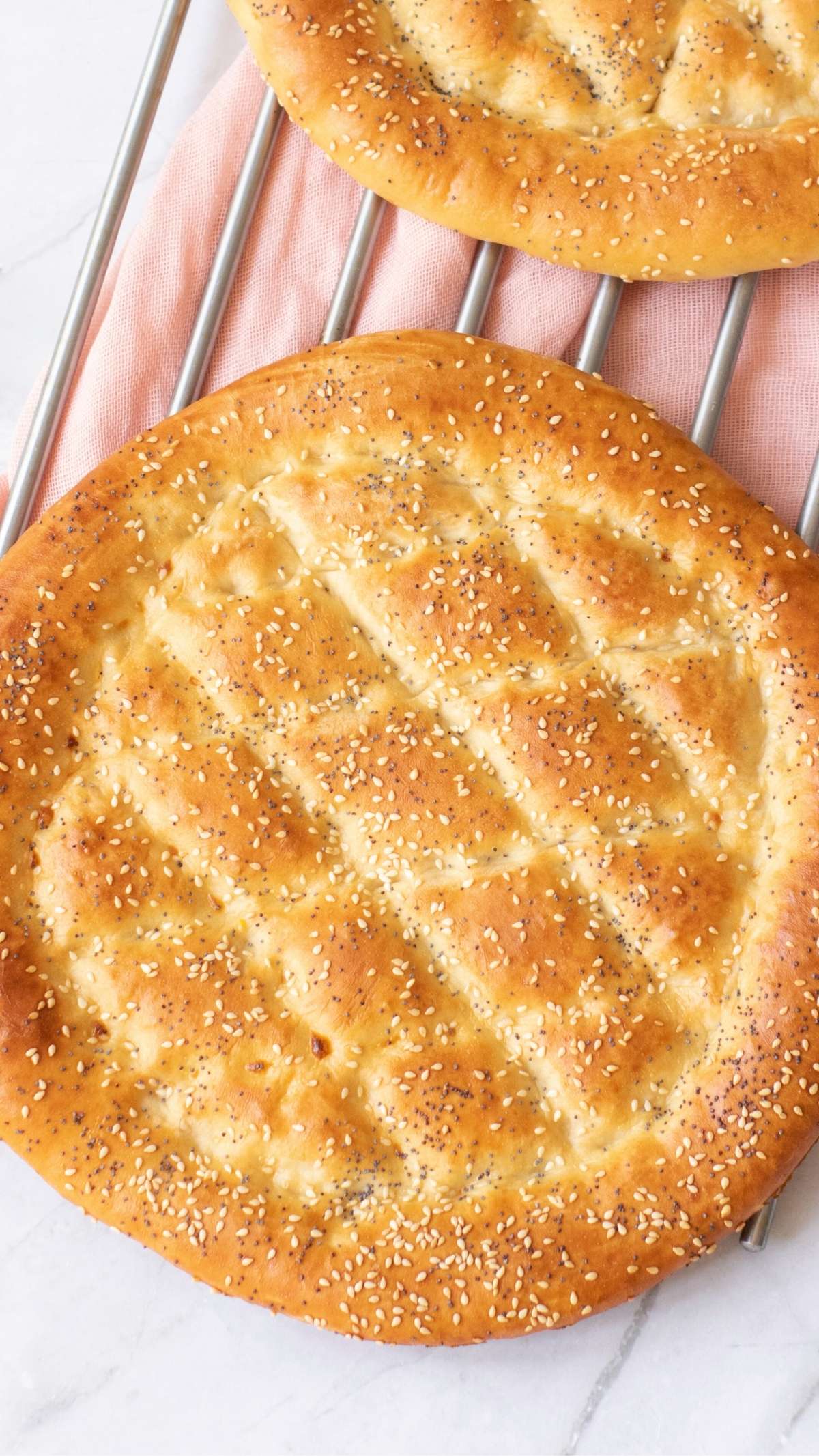
The best part? It's a no-knead flatbread that comes together with simple pantry ingredients and zero complicated techniques. If you've been intimidated by bread baking, this Turkish bread recipe is where you start.
What Is Turkish Pide?
Jump to:
- What Is Turkish Pide?
- Ingredients You'll Need for this Flat Bread
- Tools You Need to Make this Pide Bread
- Step-by-Step Instructions: How to Make Turkish Pide
- How to Serve Turkish Pide Bread
- Storing and Reheating Your Pide Bread
- Troubleshooting Common Turkish Pide Issues
- More Flatbread Recipes You'll Love
- Final Thoughts
- Recipe Card
- Frequently Asked Questions
Turkish pide (pronounced pee-deh) is a traditional flatbread from Turkey. You'll often see it called Ramazan pidesi during Ramadan, when families break their fast with this golden, sesame-topped bread.
Think of it as somewhere between focaccia and naan, with a tender crumb and slightly crispy edges. The signature look comes from the finger indentations that create a beautiful pattern across the top of the dough, plus the egg wash that gives it a golden shine.
It's very similar to my Persian Barbari recipe I highly recommend you also try!
Ingredients You'll Need for this Flat Bread

The beauty of this pidesi recipe is its simplicity. You probably have everything in your pantry right now.
For the Dough:
All-purpose flour (3¾ cups): This creates the perfect tender crumb. I recommend all-purpose flour over bread flour for this recipe because it gives you that soft, fluffy texture Turkish pide is known for.
Instant yeast (2¼ teaspoons): This is your rising agent. Instant yeast doesn't need to be bloomed in water first, so you can add it directly to the dry ingredients. If you only have active dry yeast, you'll need to dissolve it in the warm water with the sugar first and let it sit for 5 minutes until foamy before proceeding.
Granulated sugar (1½ tablespoons): Feeds the yeast and adds a subtle sweetness. Don't skip this, it helps activate the yeast quickly.
Salt (1 teaspoon): Essential for flavor. I prefer using sea salt or kosher salt for better taste, but regular table salt works too.
Warm water (1¼ cups or 310ml): Should be around 110°F, warm to the touch but not hot. Water that's too hot will kill the yeast, and water that's too cold won't activate it properly.
Olive oil (2 tablespoons): Adds moisture and a subtle richness to the dough. You can use any neutral oil if you don't have olive oil on hand.
For the Egg Wash:
Greek yogurt (2 tablespoons): Mixed with egg, this creates that signature glossy golden top. The yogurt adds a beautiful color and slight tang.
Large egg (1): Gives the pide its shiny, bakery-style finish.
For Toppings:
Sesame seeds (2 tablespoons, optional): Adds a nutty flavor and authentic look. I personally used just sesame seeds on mine and they turned out great.
Nigella seeds or black sesame seeds (2 tablespoons, optional): These little black seeds add a peppery, slightly oniony flavor. You'll see them on traditional Turkish flatbread. If you don't have them, don't worry… Sesame seeds work just as well!
Tools You Need to Make this Pide Bread
A large bowl for mixing the dough, measuring cups and spoons, plastic wrap or a clean kitchen towel to cover the dough while it rises, two baking sheets lined with parchment paper, and a small bowl for the egg wash.
That's it. No stand mixer, no special pans, nothing complicated.
Step-by-Step Instructions: How to Make Turkish Pide
Let me walk you through exactly how to make this easy Turkish bread recipe.
Step 1: Mix the Dough
In a large bowl, whisk together 3¾ cups all-purpose flour, 2¼ teaspoons instant yeast, 1½ tablespoons granulated sugar, and 1 teaspoon salt until the dry ingredients are evenly distributed. You want to make sure the yeast and salt aren't sitting directly on top of each other.
Add 1¼ cups warm water (110°F) and 2 tablespoons olive oil to the bowl. Using clean hands, mix everything together until a shaggy dough forms with no dry flour remaining at the bottom of the bowl. The dough will look rough and sticky at this point, and that's exactly what you want.
Don't overmix or knead. Just bring it together until all the flour is moistened. This should take about 1 minute of mixing.
Minoo's Pro Tip: The dough should feel tacky and slightly sticky. If it feels dry or there are dry patches of flour, add 1 tablespoon of water at a time until everything comes together.

Step 2: First Rise
Cover the bowl tightly with plastic wrap or a damp kitchen towel. Place it in a warm, draft-free spot and let it rise for 30 minutes until doubled in size.
I like to put mine in the oven with just the light on (oven off!). This creates the perfect warm environment for the dough to rise. You can also place it near a sunny window or in a warm corner of your kitchen.
After 30 minutes, the dough should look puffy and roughly twice its original size. If your kitchen is cold, it might take closer to 40-45 minutes.

Step 3: Stretch and Fold
This is the technique that replaces traditional kneading, and it takes about 30 seconds. Wet one hand with water to prevent sticking.
Grab one side of the dough, stretch it upward about 6-8 inches, then fold it over the center of the dough ball. Rotate the bowl a quarter turn and repeat this stretch and fold motion. Continue rotating and folding, going around the dough 3-4 times total until you have a smooth, cohesive ball.
The dough will transform from shaggy to smooth right before your eyes. Cover the bowl again and let the dough rest for 5 minutes. This short rest relaxes the gluten.
Minoo's Pro Tip: Keep your hands wet throughout this process. The water prevents the dough from sticking to your fingertips without adding extra flour that would make the bread dense.

Step 4: Shape the Dough
Preheat your oven to 355°F (180°C). Line two baking sheets with parchment paper.
Lightly flour your work surface. Turn the dough out onto the floured surface and use a bench scraper or knife to divide it into 2 equal pieces (each piece will be roughly 400g if you have a scale).
Shape each piece into a smooth ball by cupping your hands around the dough and rotating it in a circular motion on the work surface. The surface tension will create a tight, smooth ball.
Place each dough ball on a prepared baking sheet. Using your palms, gently press and stretch each ball into a 6-inch round disc, about ½ inch thick. Don't worry about making it perfectly circular, a slightly rustic shape is part of the charm.

Step 5: Second Rise
Cover both baking sheets loosely with plastic wrap or a damp towel. Let the dough portions rise for another 30 minutes until slightly puffed and soft to the touch.
The dough should look pillowy and feel light when you gently poke it. This second rise is what gives Turkish pide its incredibly soft texture.

Step 6: Create the Egg Wash
While the dough rises, whisk together 2 tablespoons Greek yogurt and 1 large egg in a small bowl until completely smooth with no streaks of yogurt remaining.
This mixture creates that beautiful golden color and glossy finish you see on bakery pide bread.
Step 7: Add the Signature Pattern
This is the fun part! Using a pastry brush, generously brush the entire surface of each risen dough disc with the egg wash. Don't skip the edges.
Now comes the signature Turkish pide pattern. Dip your fingertips in water (this is KEY for preventing sticking). Starting about 1 inch from the outer edge, press your fingertips firmly into the dough to create a ring of indentations all around the perimeter.
Next, press your fingertips down the center of the dough lengthwise to create a line. Then, starting from the top, make diagonal lines across the dough, pressing firmly enough to create visible indentation. Rotate the tray and make diagonal lines in the opposite direction, creating a crisscross diamond pattern across the entire surface.
Press firmly but be careful not to deflate the dough completely. You want the pattern to be visible but the dough should still look puffy.
Sprinkle 1 tablespoon each of sesame seeds and nigella seeds (or black sesame seeds) over the top of each flatbread. If you only have sesame seeds like I did, just use 2 tablespoons of sesame seeds on each flatbread.

Step 8: Bake Until Golden
Place both baking sheets in the preheated 355°F (180°C) oven. If your oven can't fit both pans side by side, place them on separate racks and rotate their positions halfway through baking for even browning.
Bake for 20 minutes, rotating the pans from front to back (and top to bottom if using two racks) at the 10-minute mark. The Turkish pide is done when it's deep golden brown on top, the edges are slightly crispy, and the bottom sounds hollow when you tap it.
Remove from the oven and let the pide bread cool on the baking sheets for 5 minutes, then transfer to a wire rack.
For the softest texture, cover the warm bread with a clean kitchen towel immediately after baking. This traps steam and keeps the crust soft rather than crispy.

How to Serve Turkish Pide Bread
Turkish pide is incredibly versatile, and I've served it dozens of different ways. Here are my favorite options:
For breakfast or brunch, serve warm pide bread with butter, cheese, olives, sliced tomatoes, and cucumbers. This is the traditional Turkish breakfast spread, and it's absolutely delicious. Add some homemade cream cheese for an extra special touch.
As a dipper for soups and stews, this flatbread is PERFECT. The soft texture soaks up every last drop. Try it with my cheddar and broccoli soup or any hearty stew.
Alongside salad and mains, Turkish pide pairs beautifully with Mediterranean cuisine. Serve it with grilled meats, roasted vegetables, or a fresh Greek salad with feta and olives.
As a wrap or sandwich bread, slice the pide in half horizontally and use it like you would any flatbread. Fill it with grilled chicken, fresh vegetables, and a drizzle of yogurt sauce.
With dips and spreads, tear off pieces and dip them in hummus, baba ganoush, labneh, or tzatziki. The slightly sweet flavor of the bread complements savory dips perfectly.
Turn it into garlic bread. Brush warm pide with melted butter mixed with minced garlic and fresh parsley, then pop it under the broiler for a minute. Trust me on this one.
If you love this bread, you'll also love my Greek pita breads, which have a similar soft texture and work great for sandwiches.
Storing and Reheating Your Pide Bread

Turkish pide is best enjoyed fresh from the oven, but it stores well if you have leftovers.
At room temperature, store cooled pide bread in an airtight container or wrap it tightly in plastic wrap. It'll stay soft for up to 2 days. Keep it away from direct sunlight and heat.
In the refrigerator, wrapped pide will last 3-4 days. The cool air will firm it up slightly, but reheating brings back that soft texture.
In the freezer, this flatbread freezes beautifully for up to 1 month. Wrap each piece tightly in plastic wrap, then place in a freezer bag. Thaw at room temperature for 2-3 hours before reheating.
To reheat on the stove top, sprinkle the bread lightly with water and heat it in a skillet over medium-high heat for 1-2 minutes per side until warmed through. Cover with a lid to trap steam.
To reheat in the oven, preheat to 300°F, lightly dampen the bread with water, wrap it in foil, and heat for 5-7 minutes until warm.
To reheat in the microwave, wrap the bread in a damp paper towel and microwave for 20-30 seconds. The texture won't be quite as good, but it works in a pinch.
Minoo's Pro Tip: Sprinkling water on the bread before reheating is the secret to restoring that soft, fresh-baked texture. The steam from the water rehydrates the crumb.
Troubleshooting Common Turkish Pide Issues

My dough didn't rise: Check your yeast's expiration date. Old yeast won't activate properly. Also make sure your water wasn't too hot (which kills yeast) or too cold (which prevents activation). Next time, proof your yeast by mixing it with the warm water and sugar and letting it sit for 5 minutes until foamy before proceeding.
The bread is too dense: This usually happens from adding too much flour or not letting the dough rise long enough. Make sure you're measuring flour correctly by spooning it into the measuring cup and leveling it off, not scooping. Also ensure your dough fully doubled during both rise times.
The pattern disappeared during baking. You didn't press deep enough with your fingertips. The dough puffs up in the oven, so those indentations need to be quite pronounced. Next time, press more firmly and make sure your fingertips are wet.
The top is pale instead of golden. You might not have brushed enough egg wash on the surface, or your oven temperature might be too low. Make sure you're generous with the egg wash and that your oven is properly preheated to 355°F.
The bread is too hard or crusty. This pide bread should be soft with just slightly crispy edges. If yours is tough, you might have overbaked it or added too much flour. Also make sure you're covering it with a towel right after baking to trap steam and keep it soft.
The bottom is soggy. Make sure your oven is fully preheated before baking. A hot oven from the start helps set the bottom crust quickly. Also check that you're baking long enough, the bottom should sound hollow when tapped.
My dough is too sticky to handle. This dough is meant to be soft and slightly tacky. Use wet hands when handling it, and don't add extra flour. If it's truly unmanageably sticky, you can dust your work surface with flour, but don't incorporate it into the dough.
More Flatbread Recipes You'll Love

If you enjoyed this Turkish pide recipe, I have a feeling you'll love these other flatbreads from my blog:
My no-knead focaccia is another incredibly easy, beginner-friendly bread that requires minimal effort for maximum flavor. It's soft, olive oil-rich, and perfect for dipping.
For something quicker, try my 3-ingredient naan. It's made on the stove top in minutes and doesn't require any rising time at all.
My flour tortillas are another staple you need in your rotation. They're soft, pliable, and SO much better than store-bought.
If you want to explore more international flatbreads, my Australian damper bread is a quick, rustic bread that's perfect for beginners.
And if you're feeling adventurous, my no-knead artisan bread creates a crusty, bakery-style loaf with minimal effort.
Final Thoughts

This Turkish pide recipe proves that impressive, bakery-quality bread doesn't have to be complicated. With 6 simple ingredients, a couple of rise times, and that signature finger-pressed pattern, you've got a flatbread that'll make everyone think you're a professional baker.
The soft, fluffy texture, golden crust, and subtle sweetness make this bread absolutely irresistible. Whether you serve it for breakfast with cheese and olives, alongside dinner with soups and stews, or turn it into sandwiches for lunch, it's guaranteed to disappear fast.
I BETTER NOT CATCH YOU buying Turkish pide from the store anymore when you can make this at home in under 2 hours!
Give this recipe a try this weekend and let me know how it turns out. Leave a comment below and rate the recipe once you've made it. I can't wait to hear what you think!
Recipe Card

Turkish Bread Recipe
EMAIL THIS RECIPE
Enter your email and I'll send this directly to you.
Plus you'll get new recipes from me every week!
Ingredients
For the Dough:
- 3¾ cups all-purpose flour
- 2¼ teaspoons instant yeast
- 1½ tablespoons granulated sugar
- 1 teaspoon salt
- 1¼ cups warm water
- 2 tablespoon olive oil
For the Egg Wash:
- 2 tablespoon Greek yogurt
- 1 large egg
For Toppings (optional):
- 2 tablespoons sesame seeds
- 2 tablespoons nigella seeds or black sesame seeds
Instructions
- In a large bowl, whisk together flour, yeast, sugar, and salt until well combined.
- Add warm water (110°F) and mix with clean hands until shaggy dough forms.
- Cover with plastic wrap and rise 30 minutes in warm spot until doubled.
- Perform stretch and folds: With wet hand, grab one side of dough, stretch up, and fold over. Repeat 3 more times around dough. Continue going around the dough until you have a smooth ball. Cover and rest for 5 minutes.
- Preheat oven to 355°F (180°C). Line two baking trays with parchment.
- Turn dough onto floured surface, divide into 2 pieces. Shape into balls.
- Place on prepared trays, gently stretch each into 6-inch round discs. Cover and rise for another 30 minutes.
- Meanwhile, make egg wash: Mix yogurt and egg.
- Brush dough with egg wash. Use fingertips to create round indent around edges, then crisscross pattern in centre.
- Sprinkle with seeds. Bake for 20 minutes, rotating at 10 minutes, until deep golden. Enjoy!
Notes
Nutrition
Want To Save This Recipe?
Share your email & we'll send it over! PLUS, you'll get new recipes from us weekly
Frequently Asked Questions
Yes, you can use bread flour, but your pide will have a slightly chewier texture. I recommend sticking with all-purpose flour for the softest, most authentic Turkish pide bread. If you do use bread flour, you might need to add an extra tablespoon of water since it absorbs more liquid.
No, yeast is essential for this recipe. The yeast creates the rise and fluffy texture that makes Turkish pide what it is. However, if you want a quick flatbread without yeast, try my 3-ingredient naan instead, which uses baking powder as the leavening agent.
Mix your yeast with the warm water and sugar and let it sit for 5 minutes. If it becomes foamy and bubbly, your yeast is active. If nothing happens, your yeast is dead and you need fresh yeast. Always check the expiration date on your yeast package before starting.
The dough itself is already dairy-free since it only uses water and olive oil. To make it completely vegan, skip the egg wash and brush the bread with olive oil mixed with a tablespoon of plant-based milk instead. It won't have the same golden shine, but it'll still taste delicious.
The most common reasons are old or dead yeast, water that was too hot (which kills yeast) or too cold (which doesn't activate it), or a cold kitchen that prevented proper rising. Make sure your water is 105-115°F and place your dough in a warm, draft-free spot to rise.
Absolutely! You can prepare the dough through step 5, cover it tightly with plastic wrap, and refrigerate for up to 24 hours. Bring the dough to room temperature for 30 minutes before continuing with the egg wash and baking. You can also freeze baked pide for up to 1 month.
Nigella seeds (also called black cumin or kalonji) have a slightly peppery, oniony flavor that's traditional on Turkish pide. You can skip them if you don't have them, use black sesame seeds instead, or double the amount of regular sesame seeds. The bread will still be delicious.
Dense bread usually means you added too much flour or didn't let the dough rise long enough. This dough should be soft and slightly sticky. Resist adding extra flour during mixing. Also make sure your dough fully doubles in size during both rise periods before moving to the next step.
The key is pressing firmly enough with your fingertips when creating the pattern. Dip your fingers in water and press deep indentations into the dough. The bread will puff up during baking, so if your indentations are shallow, they'll disappear. Press confidently and deeply.
Yes! A pizza stone will give you an even crispier bottom. Preheat the stone in the oven for at least 30 minutes at 355°F, then carefully slide the pide (on parchment paper) onto the hot stone. Watch closely as it might bake slightly faster.
While both are flatbreads from Mediterranean cuisine, Turkish pide is thicker, softer, and doesn't have a pocket like pita bread. Pide has that signature diamond pattern and egg wash glaze, while pita is usually plain and puffs up to create a pocket for stuffing.
Yes! For smaller appetizer-size portions, divide the dough into 4 pieces instead of 2 and reduce baking time to 12-15 minutes. For one large loaf, keep the dough whole, shape into a larger round, and bake for 25-30 minutes.